A note from the founder
The Indian Guitar Archives captures the life and journey of Indian guitarists, whether they are seasoned professionals or passionate beginners. As a neuroscientist and a guitar player myself, I feel deeply connected to the journeys of these artists - each story is special and deserves to be heard.
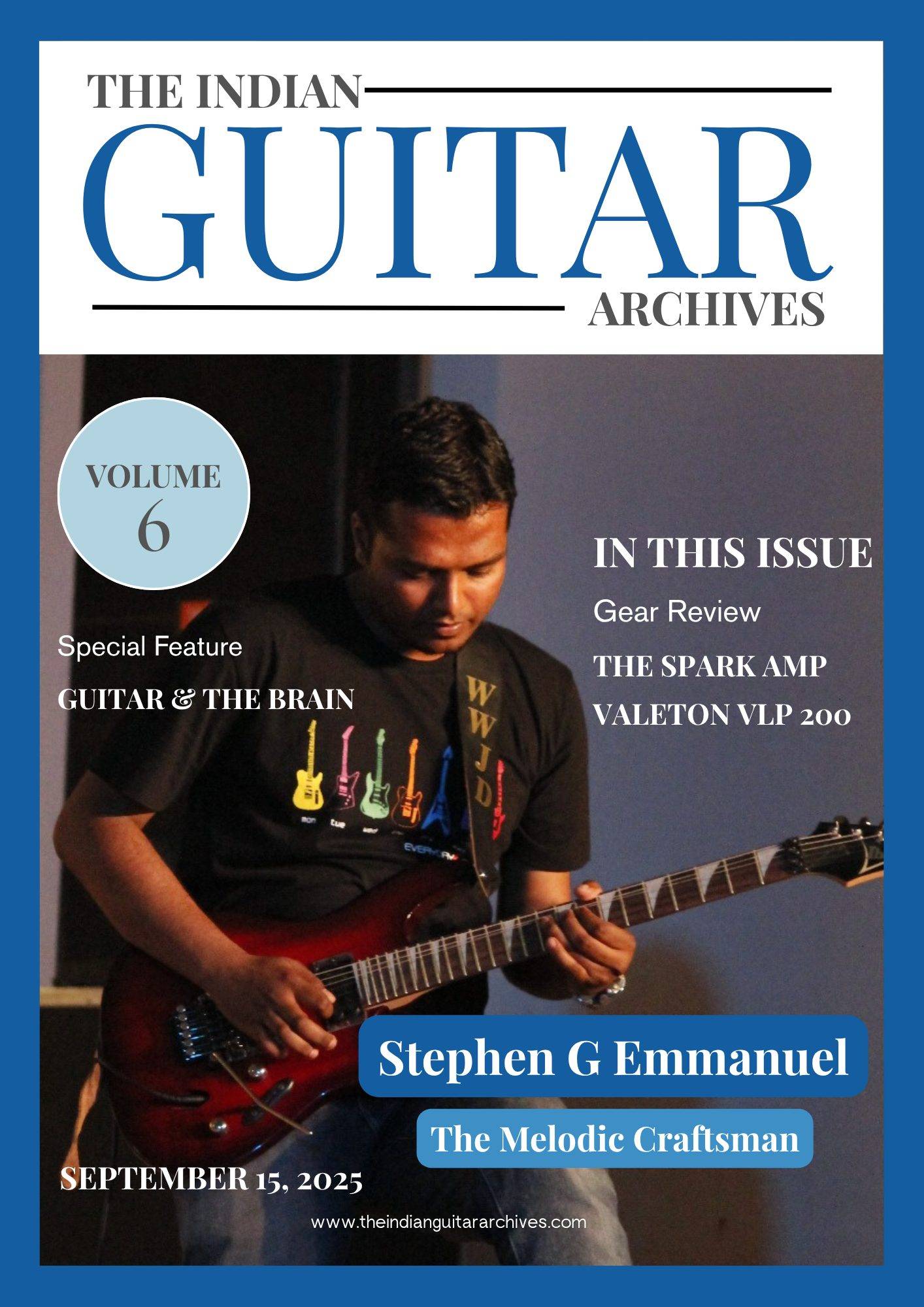
In this edition, we are honored to feature Stephen G Emmanuel, a guitarist whose journey speaks of resilience, creativity, and an unshakable love for music. We also bring you two gear reviews: the Positive Grid Spark, a smart amp designed to transform practice, and the Valeton VLP 200, a dual looper pedal that feels more like a bandmate than a gadget.
Finally, our feature on music and the brain explores how playing guitar strengthens memory, sparks creativity, and rewires the mind for growth at any age. Thank you for being part of this growing community.
Stephen G Emmanuel
The Melodic Craftsman
View Full Profile →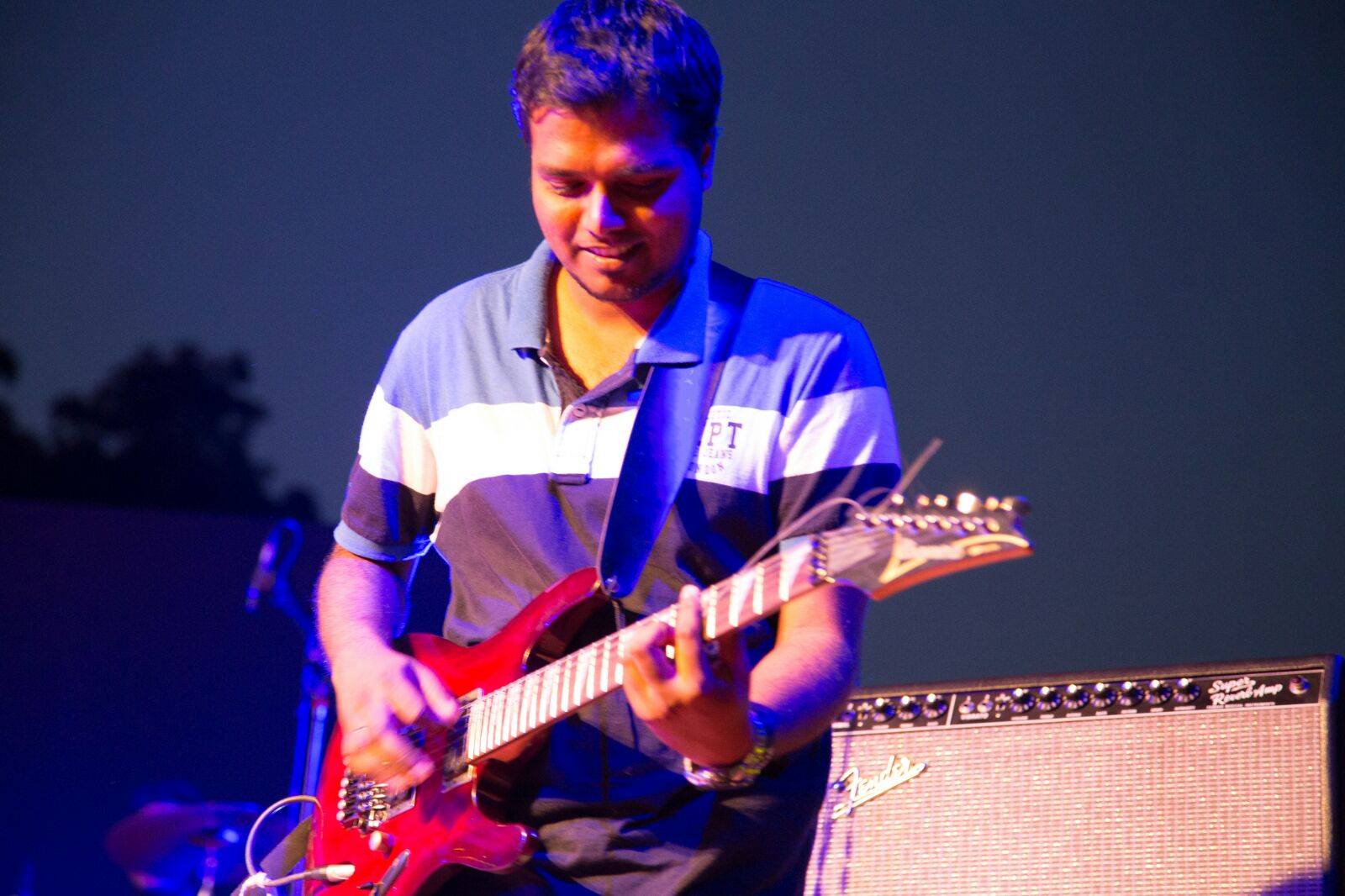
The Songsmith from Scudder
From the moment a 13-year-old Stephen picked up his family's well-worn acoustic guitar in Vellore, a lifelong journey began. What started with a handful of simple chords taught by his mother became a passion that would define his identity. Without formal training, he borrowed a classmate's notebook of lessons and taught himself chord after chord.
As a teenager, his world opened up to rock - the Eagles, Guns N' Roses, Dire Straits, Metallica, and Dream Theater. Life as a hostel student added its own struggle: his guitar was often confiscated during the week, and he could play only on Sundays. Instead of breaking his spirit, it deepened his hunger to play.
Today, as lead guitarist of Adonai, Stephen carries a message to the guitar community: melody matters more than speed, and a tune worth remembering is far more powerful than a flurry of forgotten notes.
Beginnings in Guitar Playing
I started learning guitar when I was around 13 years old. My first inspiration was my mother, who used to play very basic guitar chords. At Ida Scudder School in Vellore, every morning we had assemblies where students would lead songs and play instruments. That sparked my interest, and my mother became my first teacher. Since I could not afford formal training, I copied chords from a classmate's music notebook and practiced them on my own.
Support from Friends and Family
My family was supportive since both my parents had some musical background. My father used to play the dholak and bongo, so music was not new in our home. Many of my friends were inspired to pick up the guitar after seeing me play, and being a guitarist soon became part of my identity.
Challenges Along the Way
One of the biggest challenges was the lack of a teacher after I had learned the basics. I didn't have access to advanced training, the internet, or a computer. The only way I could improve was by figuring out songs on my own, so most of my journey has been self-taught.
I lived in a children's hostel, and the warden would often confiscate my guitar during the week, saying it distracted me from studies. I was only allowed to play on Sunday afternoons. It felt like a tragedy then, but it made my time with the guitar even more precious.
First Guitars
My first guitar was a Givson acoustic. Around 17, I finally got a Givson electric guitar. For the first four years of my journey, I practiced everything on an acoustic before moving to electric.
Musical Influences
My biggest influences were Guns N' Roses, Scorpions, Metallica, Joe Satriani, and to some extent John Petrucci. Joe Satriani has remained my most consistent influence. I play lead guitar in a band called Adonai, and my bandmates are a big influence too - every time we write or rework a song, I learn something new.
Visualizing Music
When I write music, the theme usually guides me. I also write instrumental pieces built around a central tune, similar to Joe Satriani's style. Whenever I come up with a catchy phrase, I imagine the situation or emotion it represents and build the rest of the song around it.
Giving Back to the Guitar Community
I focus on melody rather than speed. Through my music, I want to remind the guitar community that playing fast is not everything. What matters most are melodies that touch people and tunes that stay with them.
Advice for Beginners
Learn slowly and don't rush - getting the basics right is essential. The fastest way to learn is actually to play slowly, because learning well the first time saves you from relearning later. And listen to different genres; try classical music too, as it can enrich your playing.
Connect with Stephen → @stephen_g.emmanuelPositive Grid Spark
The Smart Amp That Wants to Be Your Practice Partner
View Full Profile →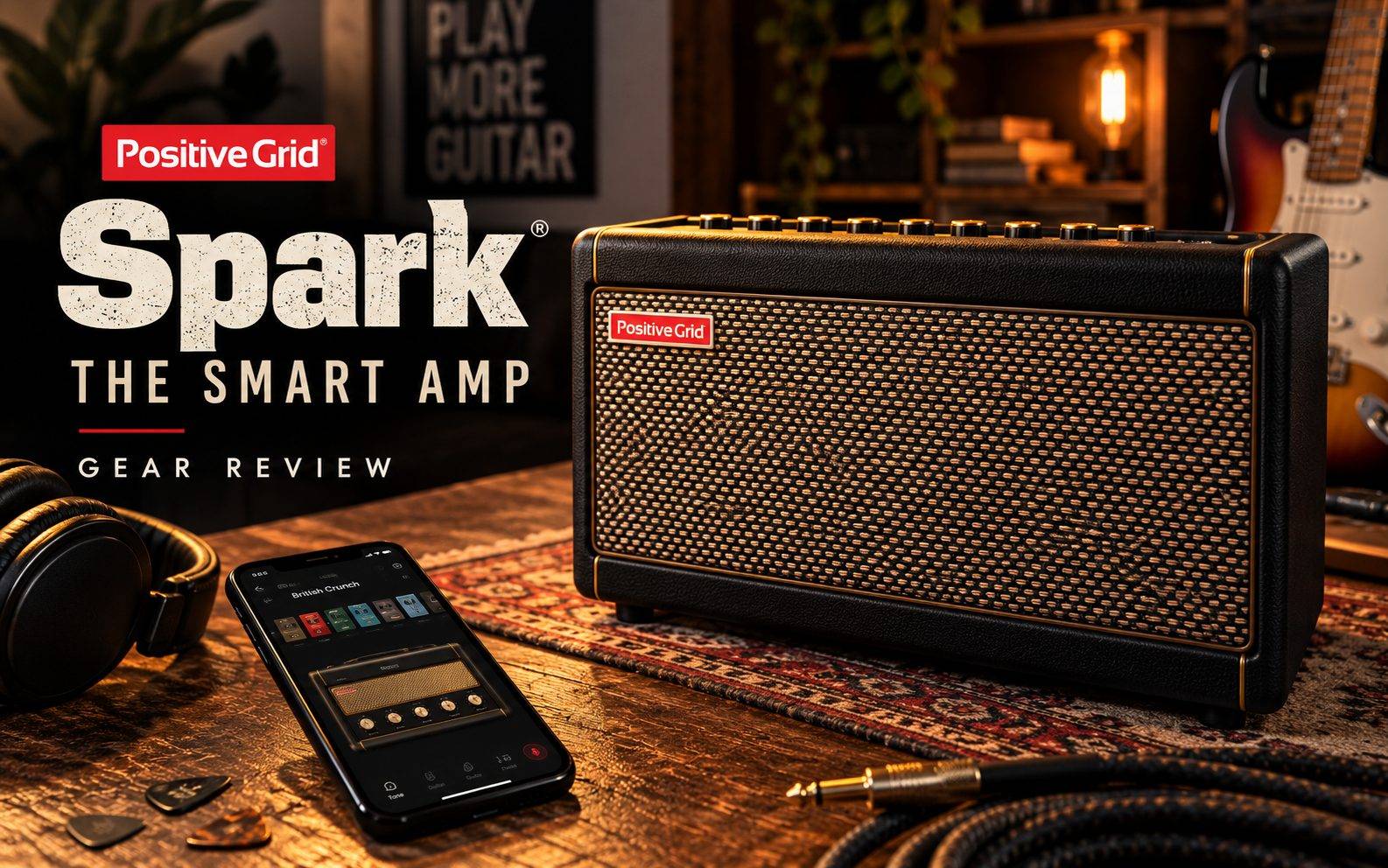
Practice amps are no longer just about clean tone plus basic overdrive. The Positive Grid Spark rolls amp modeling, Bluetooth streaming, learning tools, app integration, and a recording interface into one 40W stereo desktop amp.
Overview and Key Specifications
Two custom 4-inch speakers with a tuned bass reflex port. Onboard BIAS modeling with around 30 amp models and 40+ effects. Physical knobs for Gain, Bass, Mid, Treble, Master, Mod, Delay, and Reverb, plus four preset buttons. Quarter-inch input, aux in, Bluetooth, and USB audio. Smart Jam provides an automated backing band, Auto Chords detects chords in real time, and ToneCloud offers thousands of presets.
What Works Really Well
Smart Jam and Auto Chords genuinely help players learn songs faster and make solo jamming more enjoyable. With dozens of models and community presets, the tonal range is broad. It retains its character at low volumes, doubles as a USB interface and Bluetooth speaker, and its compact retro design keeps the controls friendly.
Limitations
Forty watts won't cut through a full band in a large room. Bass response won't replace a dedicated bass amp. Some features depend on the app and firmware, the original Spark is not battery powered, and some users report quality control and support issues.
The Verdict
For players who want more than plug-in-and-amplify, Spark hits a sweet spot of versatility, motivation, and tone. It lacks full stage output and depends on software, but for many guitarists in 2025 it may feel more like a practice partner than just another piece of gear.
Valeton VLP 200
A Dual Looper Pedal That Wants to Be Your Bandmate
View Full Profile →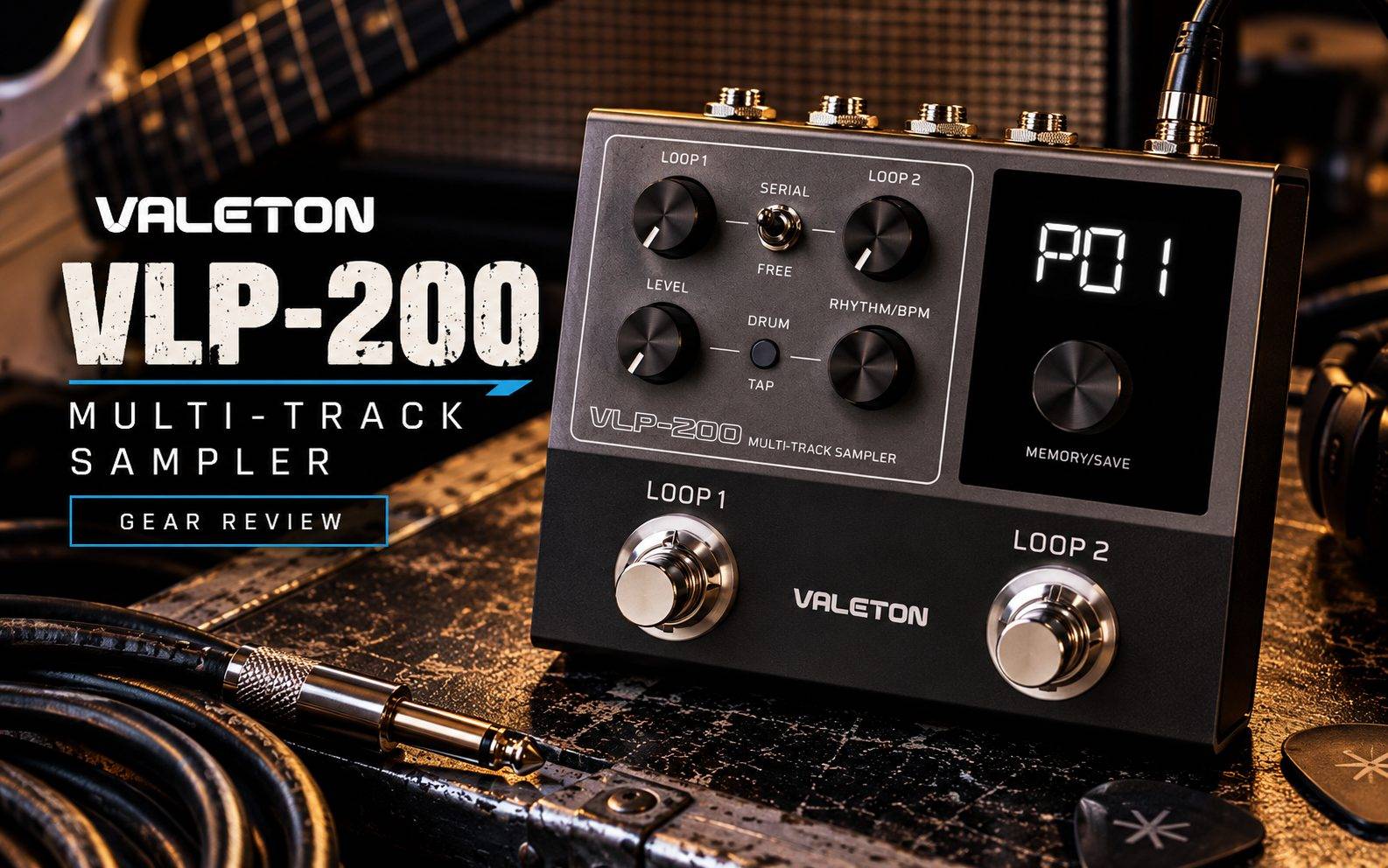
In an era where loopers are judged by how many features they pack, Valeton's VLP 200 Multi Track Sampler and Looper pushes beyond the basics - drums, storage, dual tracks, and vocal or ambient inputs, all at a competitive price.
Features and Specs
Two independent loopers with SERIAL and FREE collaboration modes. One hundred built-in rhythm patterns across sixteen styles, with auto quantization. Smart overdub doubling, ninety-nine project slots, and up to seven hours of 24-bit/48kHz stereo WAV recording. Stereo I/O with a mic-switchable left input, headphone out, MIDI, USB-C, and a rugged cast metal chassis.
What Works Well
The feature density is generous for the price. SERIAL mode helps switch between verse and chorus while FREE mode layers textures. Audio quality is pro-level, the headphone jack and auto record make it great for quiet practice, and the build is ready for gigs.
Where It Could Be Better
There is a learning curve, and mistimed overdubs can be tricky live. Some users report inconsistent MIDI sync and occasional input issues. The footprint is larger than simpler loopers, and some players want a dedicated stop footswitch and a better display.
Verdict
Ambitious and generous, the VLP 200 does more than most loopers in its class. If you can handle a steeper workflow, it can feel like a creative partner - a true bandmate in pedal form.
Strum Smarter
How Playing Guitar Transforms Your Brain
Forget Sudoku. Neuroscience reveals that learning guitar is one of the most powerful workouts for your brain, boosting memory, creativity, and cognitive function. As the first chord rings out, you are doing more than making music - you are conducting a symphony of neural activity.
The Maestro in Your Mind
The motor cortex sends precise signals to your fingers. The auditory cortex compares every note to its intended pitch and adjusts in real time. The visual cortex translates tabs and notation into action, while the prefrontal cortex plans the next phrase, holds the rhythm, and shapes emotion.
Forging the Brain's Bridge
The left hemisphere counts beats and decodes theory; the right recognizes melody and feels the flow. Playing engages both at once, strengthening the corpus callosum - the bridge between them - for faster communication and better problem-solving beyond the fretboard.
The Cognitive Benefits
Memorizing scales and songs strengthens the hippocampus. Balancing rhythm, melody, and technique hones executive function. Musicians pick out subtle sounds in noise more easily, and playing lowers stress while constant learning promotes neuroplasticity.
It Is Never Too Late
Adult brains retain neuroplasticity throughout life. Adults bring discipline and clear goals, and every new chord becomes a new neural pathway. Learn something new, play with others, and switch styles - novelty is one of the strongest triggers for growth. Keep playing. Your brain will thank you.