Where instinct meets innovation
What makes guitar culture endure? Not spectacle. Not speed. Not trends. It is sincerity.
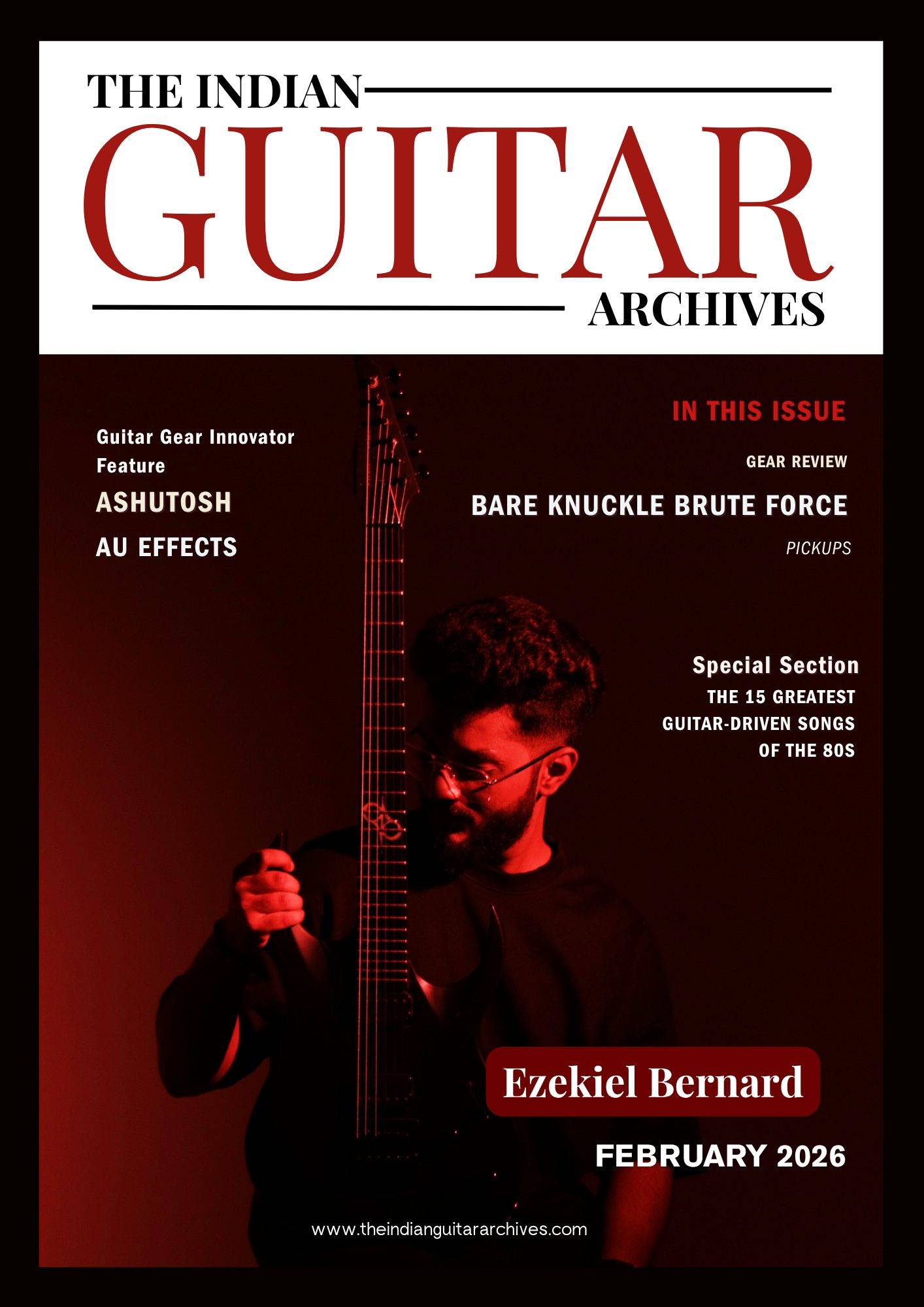
This issue reflects two powerful forces shaping today's guitar landscape - inner instinct and evolving craft. Our feature on Ezekiel Bernard reminds us that meaningful journeys often begin quietly. A second-hand instrument. Limited resources. Persistent curiosity. His story represents something deeply authentic within Indian guitar culture - growth built on patience, experimentation, and emotional honesty.
At the same time, builders like Ashutosh of AU Effects show how innovation can emerge from passion - engineering analog circuits to make iconic tone more accessible for Indian musicians. Whether through independent pedal design or precision-crafted tools like the Bare Knuckle Brute Force, musicians are constantly searching for better ways to express what they already feel.
From a neuroscience perspective, creativity thrives at this intersection. The brain responds to pattern and structure - but it is emotion that gives those patterns meaning. Instinct meets discipline. Feel meets framework. This issue lives in that space.
A guitarist shaping silence into sound. A builder engineering accessible tone. A celebration of an era where riffs defined identity. At The Indian Guitar Archives, our purpose remains simple: to document journeys - not just performances, but processes. To observe how Indian guitarists think, adapt, build, and endure.
"Listen closely. To your instrument. To your instincts. To the long road that shapes every honest musician."
Ezekiel Bernard
Building emotion from silence and six strings
View Full Profile →
"The guitar sort of chose me. The sound, the emotion, the versatility… it just clicked."
Some journeys begin with a decision. Others begin with a sound.
Framing emotion in six strings
For Ezekiel Bernard, it started at home. The first spark came from his father, his earliest inspiration and the quiet force that nudged him toward music. But another powerful influence shaped his direction as well: his time at Madras Christian College.
What he calls a “mild influence” is likely an understatement. The atmosphere, the culture, the creative energy around him did more than surround him with music. It pushed him to take the guitar seriously.
He says the guitar chose him. Not in a dramatic, poetic way, but in the most honest way possible. The sound clicked. The emotion felt right. The versatility fascinated him. What began as curiosity slowly became commitment. The rest, as he puts it, is six-stringed history.
But the road was not effortless. Support did not always come easily. Financial limitations made access to quality gear and structured learning difficult. Finding the right material to grow beyond the basics was a challenge. YouTube was not the endless resource it is today, and mentorship was rare. Progress required patience, resourcefulness, and a stubborn belief that it was worth pursuing.
Perhaps that resistance built something stronger. Hunger.
His first guitar was a second-hand Lotus Telecaster, bought for ₹5,000. Rough around the edges. Imperfect. Honest. It may not have been glamorous, but it became a companion in growth. Every guitarist remembers their first instrument, not for its price tag, but for the doors it quietly opened.
Musically, Ezekiel draws inspiration from modern progressive players who approach the instrument as storytellers. Artists like Pierre Danel, Olly Steele, Connor Kaminski, and Mike Stringer have influenced his sense of tone, feel, and texture. What draws him in is not just technical ability, but emotional architecture.
And what does he hope his own music accomplishes? If it makes someone think, “Maybe I can try that too,” then it has done its job. He wants to push sound honestly. To experiment without fear. To share ideas openly. To inspire through authenticity rather than perfection.
His advice to those just picking up the guitar is refreshingly simple. Experiment. Make strange sounds. Do not be afraid to sound bad. Finding your voice requires wandering through noise. The hours you put in will never betray you.
In a world that often rewards polish, Ezekiel Bernard reminds us that growth is built in quiet rooms, through struggle, persistence, and imperfect instruments. Tone is not purchased. It is discovered. And sometimes, it begins with a father's influence, a college that ignites curiosity, and a second-hand Telecaster that refuses to give up.
When he writes, he does not begin with theory. He begins with feeling. An emotion. A memory. Sometimes even silence. From there, he builds like an architect framing a moment. Chords form the foundation. Melodies add dimension. Textures create atmosphere. Each layer exists to make the original emotion translate clearly. It is less about showcasing skill and more about making something internal audible.
His view of the music ecosystem is grounded and generous. Artists, he believes, need spaces to grow without being judged purely by metrics and algorithms. Support does not always mean money. Sometimes it is as simple as listening, sharing, or encouraging. Sometimes the smallest gesture creates the biggest impact.
He is certain there are many underrated guitarists waiting for a stage. Talent is not rare. Opportunity is. If more platforms celebrated raw artistry over hype, the scene would expand in ways we cannot yet imagine.
Connect with Ezekiel → @ezzekiel18Ashutosh - AU Effects
Engineering emotion through analog circuits
View Full Profile →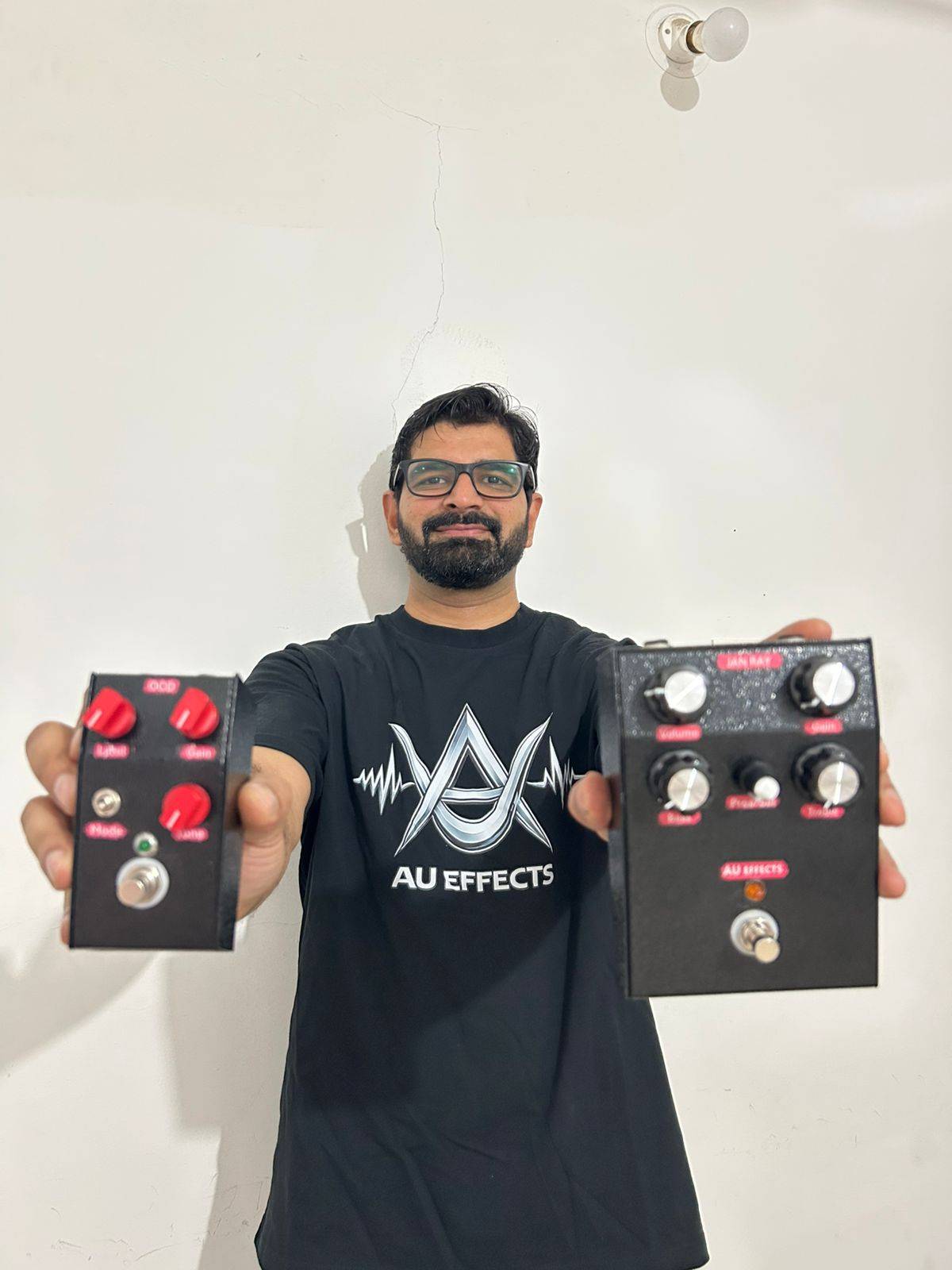
An electronics engineer with a love for distortion, Ashutosh started by cloning legends. Today, AU Effects is his answer to making iconic tone accessible in India.
The prices of some legendary pedals like the ProCo Rat and the Guv’nor really made me think about cloning. I always prefer to DIY if something can be made, and since my background was in electronics engineering, I was comfortable understanding circuits. So I made my own ProCo Rat and Guv’nor with DPDT switches and electrical boxes. I didn’t even know there were boutique pedal makers out there, but once I looked at the prices, I started cloning more of them - Lovepedal and EQD are my favourite brands. Later, in the last one year, I felt it’s a gap in India, and that’s how AU Effects came into the picture.
It was the ProCo Rat that really caught my attention. I love its raw, aggressive distortion, and honestly, it’s also a pretty simple build for a first project. Knowing that some famous metal bands used it on iconic albums made it even more exciting for me - it felt totally worth trying. Later, I cloned the MXR Distortion+ and the Marshall Guv’nor. Some of our friends in the group are still using them, which honestly feels pretty rewarding.
I do play guitar, but not electric that much - I’m still learning. Lately I’ve been more focused on building pedals than playing. I’m really into metal, so high-gain distortion pedals are what I love most. That’s actually how I got started, cloning old-school distortion circuits. But now, with AU Effects, I’m trying to expand into overdrives, boosters, and more. Cloning was the starting point for me, and it will always be part of what I do. But now I’ve also begun modding and enhancing those circuits to offer something better and more unique.
At first, I didn’t care much about how pedals looked. I just needed something unbreakable, cheap, and easy to drill. You might laugh, but my first pedals were built in electrical boxes and even small plastic tiffin boxes! 3D printing eventually solved the problem, letting me replicate regular pedal enclosures and layouts, which really helped kick off sales. Now I work with suppliers to create lightweight, powder-coated aluminum enclosures that everyone loves. At this point, I’m focused on making pedals look cooler and more pedalboard friendly, experimenting with different shapes and designs.
It really depends on what the buyer is expecting, whether they want something exactly like the original or an upgraded version of it. I usually suggest adding something extra, like additional clipping options, tweaking the gain stage, or slightly reshaping the tone structure. All of this is part of the learning process - the more you build and play, the more you understand the circuit and the more it naturally evolves. I’m always up for modding more, even if the first attempt doesn’t work out. Feedback and fixing mistakes are what give you new ideas and a variety of approaches to improve. I do modify pedals based on requirements and feedback - offering more options on a standard design helps create new tones, but some buyers prefer to keep things simple with the same controls.
If it makes you headbang or calms your mind and lets you forget all the chaos around you, then it’s a great tone. For me, that’s the high-gain, distorted sound you get in metal - raw, powerful, and addictive. I’ve tried 5–6 versions already, and each one has a slightly different sound. It’s really pleasing to the ears.
The Fuzz Face is a great example - it’s simple, but I’ve modded it in so many ways. My focus is on affordable pricing and customization options. Since I build pedals using components readily available in India, repairs are easy - even if your effect unit’s PCB fails, the enclosure can be reused for another board at minimal cost. Pots and jacks are simple to replace, and the pedal keeps a unique look.
With AU Effects, I want to help musicians who have talent but might not be able to try great pedals because of high prices or limited availability in India. Making these pedals accessible and reliable is my way of supporting them.
It’s subjective, but I lean toward analog. If the player is good, analog can do wonders. Digital pedals offer flexibility and variety, but to get the best results, you usually have to spend more and really learn the gear.
Learn from your failures, don’t stop, and keep making things. Talk to musicians, understand their needs, and try to solve them - that’s what will keep you happy and motivated. Sourcing parts used to be a big challenge, but not anymore.
Yes - the building blocks of most pedals are basically the same, we just adjust certain component values to shape different tones. The more I build, the more ideas I get, and that’s how I will start developing my own designs, although adding extra features to originals is already happening.
Right now, I’m the only one building the pedals at AU Effects. My brother handles the 3D printing, and my wife helps with social media - it’s truly a small family effort. Because of that, and considering the growing demand, it can be challenging to keep up with higher volumes. We’re doing our best to maintain quality while slowly growing at a pace we can manage. I want to grow organically, especially in these early years - gathering as much feedback as possible and identifying the real gaps in the market. At the same time, I’m looking for and training people who can manufacture PCBs for our brand - I’ve already started teaching a few. Once PCB production and soldering become more streamlined, scaling up will be much easier. Our intention is clear: grow with quality first, and only then move toward higher volume and mass production. At the very least, we want to become a strong alternative to most boutique brands - offering the same passion and tone, but with our own identity and affordability.
Yes, this is very important - today I do have helping hands who helped me get to what AU Effects is now. I also receive great support from musicians who are willing to try out my pedals at their own expense. I always encourage buyers to share their honest feedback and let me know what could be improved. Then I work on refining the design and creating a better version based on their experience. This process helps me learn and grow, and most importantly, it builds trust.
Bare Knuckle Brute Force
Engineered for crushing precision
View Full Profile →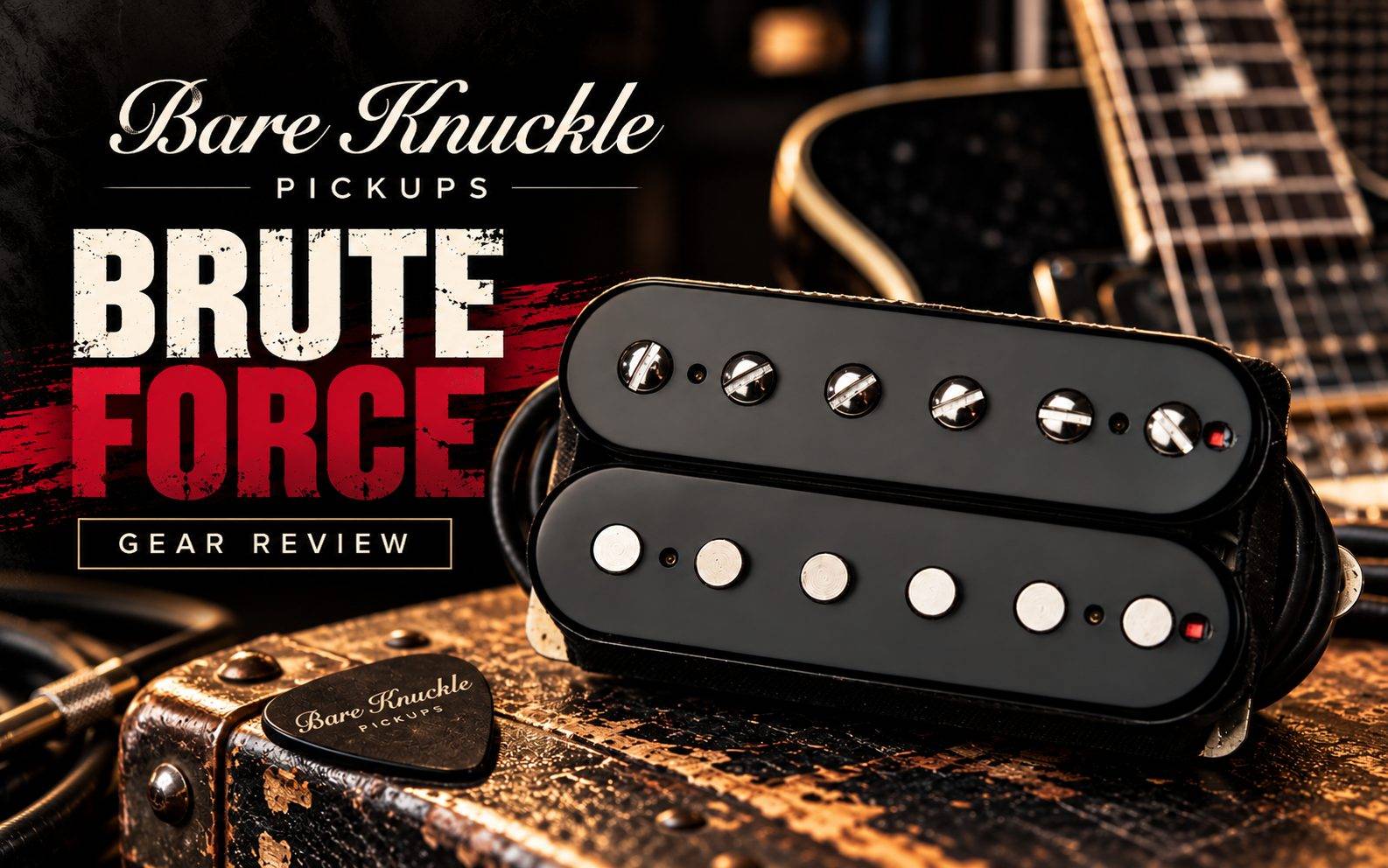
Built by Bare Knuckle Pickups, the Brute Force 6-string humbuckers are designed for players who demand relentless power without sacrificing clarity. Whether you're tuned to Drop C, Drop B, or standard tuning with heavy strings, this pickup set delivers tight low end, aggressive mids, and razor-sharp articulation. If your riffs need to hit hard and stay defined - this is your weapon.
Designed for Modern Heavy Guitar
The Brute Force 6-string set was developed for modern metal, metalcore & hardcore, djent & progressive metal, down-tuned rock, and tight rhythm recording. These pickups push your amp hard while maintaining note separation under high gain.
Feel & Dynamics
Unlike many high-output pickups that over-compress your playing, the Brute Force retains dynamic response. Pick softer - it cleans up. Dig in - it roars. You stay in control.
Built for Serious Players
Each pickup is handcrafted with premium components, built for durability and long-term reliability, and designed to handle extreme gain levels. This is boutique craftsmanship with modern metal performance.
Why Choose Brute Force for Your 6-String?
Tight low-end for drop tunings. Aggressive, mix-cutting mids. High output without muddy compression. Ideal for modern heavy styles. Professional recording clarity. If you're tired of muddy low end and undefined distortion, upgrade your 6-string and experience controlled brutality with surgical precision. Your riffs deserve impact.
Tone Profile
Low End - Tight & Controlled. No flabby bass. Just punchy, percussive chugs that stay locked in.
Midrange - Aggressive & Focused. Forward upper mids help your guitar cut through dense mixes and live band settings.
High End - Clear & Present. Articulate without harsh fizz. Leads stay sharp, riffs stay defined.
Wax potted for feedback control · Hand-wound in the UK · Multiple cover options available
The ceramic magnet provides fast transient response and immediate attack - perfect for tight palm muting and technical riffing.
Studio-Ready Performance
Brute Force pickups excel in recording environments: excellent note separation under saturation, minimal muddiness in layered guitar tracks, clear articulation in low tunings, and reduced need for corrective EQ. Producers love pickups that make mixing easier - this set delivers mix-ready tone straight from your guitar.
The 15 Greatest Guitar-Driven Songs of the 80s
The decade when riffs ruled the radio
The 1980s weren't just about big hair and bigger choruses. They were a golden era for the electric guitar. From arena rock to thrash metal, from blues-infused solos to delay-soaked textures, the 80s pushed six strings into bold new territory. This was the decade when guitarists became superheroes. When riffs opened songs like battle cries. When solos weren't optional - they were events. Here are the tracks that defined that era.
The opening riff isn’t just recognizable - it’s emotional architecture. Slash turned a warm-up exercise into one of rock’s most enduring melodic statements. The solo builds with lyrical phrasing rather than pure speed, proving feel can outshine flash.
Few riffs hit harder than Back in Black. Angus Young distilled rock guitar down to its most primal form: groove, tone, attitude. It’s a masterclass in restraint - space between notes makes the riff punch even harder.
With galloping rhythms and harmonized twin leads, The Trooper became a blueprint for metal guitar interplay. Dave Murray and Adrian Smith proved two guitars are better than one when they move like cavalry.
That opening tone is pure authority. Mark Knopfler’s fingerstyle attack created one of the fattest, most textured guitar sounds ever captured on tape. It’s swagger without excess.
Randy Rhoads didn’t just write a riff - he wrote a metal anthem. Blending classical precision with raw aggression, Rhoads elevated heavy metal guitar into something almost orchestral.
The talk-box hook became an arena-rock signature. Richie Sambora balanced melody and muscle, making the guitar both rhythmic engine and sing-along weapon.
Relentless downpicking defines this track. James Hetfield’s precision turned rhythm guitar into a percussive assault. Thrash metal reached technical heights without sacrificing raw power.
The Edge proved speed wasn’t everything. Delay effects transformed simple note patterns into shimmering, cathedral-sized soundscapes. Minimal notes. Maximum impact.
Pop met shredding when Eddie Van Halen delivered his solo. It wasn’t just a guest spot - it was a cultural crossover moment. Rock guitar exploded into mainstream pop.
Often underrated as a guitarist, Prince poured pure emotion into this solo. The bends ache. The sustain sings. It’s blues phrasing dressed in arena grandeur.
Another riff-driven gem, proving rhythm guitar can be as infectious as any solo. It’s groove-first rock at its finest.
Layered production meets hook-heavy guitar. Polished but punchy, it defined the sound of glam metal radio dominance.
Eddie Van Halen fused groove and flash. The riff drives like a muscle car engine - aggressive, playful, unstoppable.
Massive riffs and dramatic dynamics define this track. It’s blues-based metal scaled up to cinematic proportions.
That chugging intro riff became a global symbol of resilience. Simple, tight, unforgettable.
Why the 80s Were the Ultimate Guitar Decade
The 70s built the foundation. The 90s shifted toward alternative textures. But the 80s? The 80s celebrated the guitar as spectacle. Solos were center stage, riffs were radio hooks, tone became identity, and guitarists became icons. From the raw crunch of AC/DC to the technical ferocity of Metallica, the decade proved that six strings could dominate culture.
Plug in. Turn it up. The 80s never really left - they just keep getting louder.