Listening to the stories behind the strings
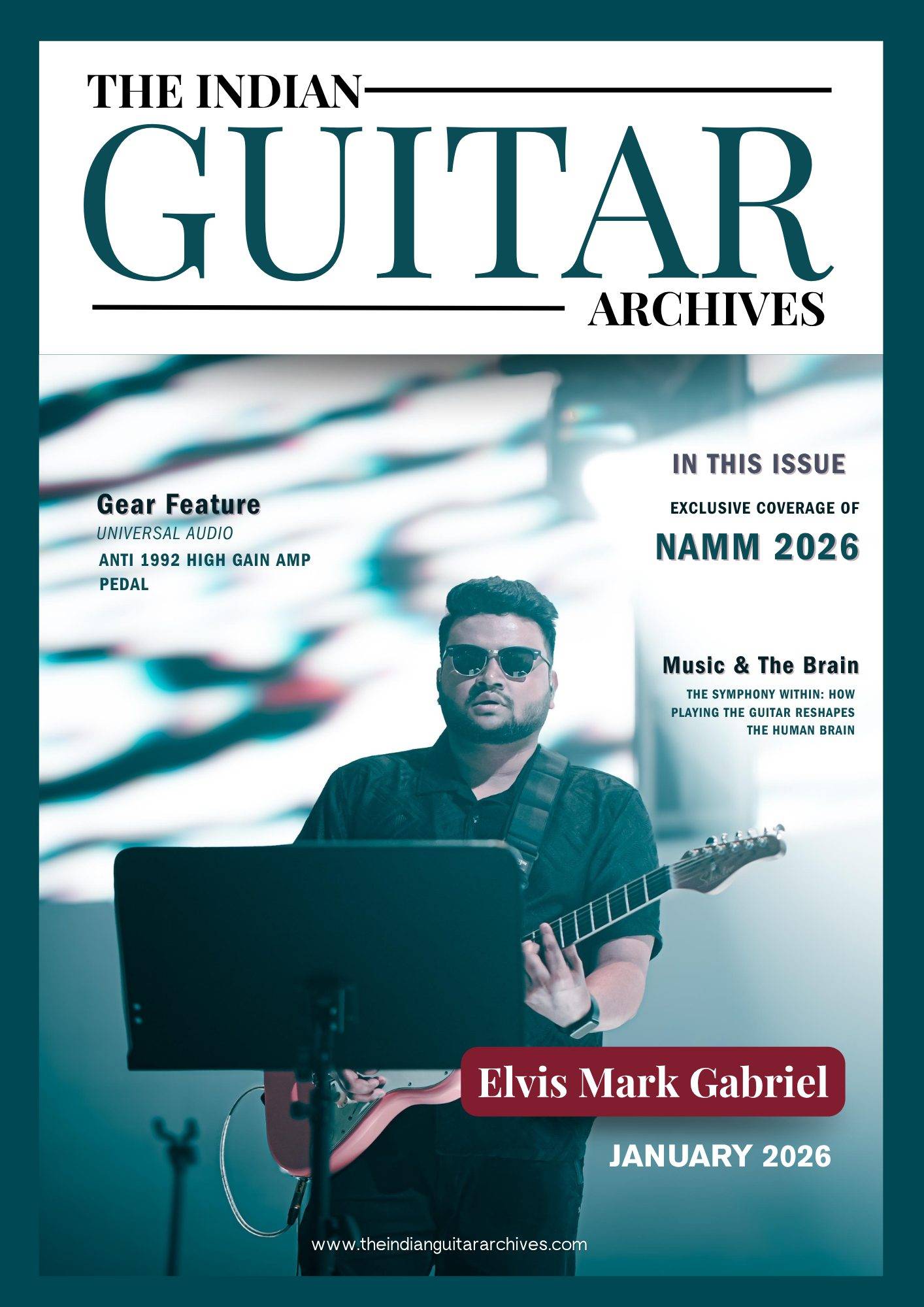
When we decided to feature Elvis Gabriel this month, we weren't looking for scale. We were listening for sincerity. Elvis' story doesn't begin with ambition or acceleration. It begins with curiosity, hesitation, and a quiet return to the instrument - talent shaped not by noise, but by persistence and inner listening.
And then there is NAMM. At first glance, NAMM appears to sit at the opposite end of the spectrum - loud, global, dazzling, a convergence of technology, design, craftsmanship, and commerce. But beneath the spectacle lies something deeply familiar: musicians searching for better tools to express what they already feel.
From a neuroscience perspective, music is not merely sound - it is a pattern, a memory, an emotion, and a repetition. Whether it is a guitarist finding their voice in a bedroom or a luthier unveiling an innovation on a global stage, the same neural truth applies: creativity emerges when instinct meets structure. This issue lives at that intersection.
Elvis reminds us that warmth matters more than flash. NAMM reminds us that innovation expands possibilities. Together, they tell a larger story - that meaningful music is born when human intention meets evolving craft. At The Indian Guitar Archives, our role is not to chase trends, but to trace journeys.
"May this issue encourage you to listen more closely - to your instrument, to your instincts, and to the long road that shapes every honest musician."
Elvis Mark Gabriel
Finding warmth, intuition and music in every note
View Full Profile →
"At first, it just kind of happened. I started out on bass, but lead guitar always looked cooler back then."
Warmth over flash, instinct over noise
Elvis's first encounter with the guitar was shaped by optimism bordering on innocence. At eight or nine years old, he believed he could learn the instrument in two days, ahead of a school assembly. His father - who himself knew only three chords - showed him one of them. It was a generous gesture, but not a miracle. What did happen, though, was quieter and far more important: the guitar entered his life not as a triumph, but as an idea. Something unfinished. Something waiting. For a long time, it stayed that way.
Years passed, following the expected rhythms of an Indian household - education, responsibility, structure. Then, sometime around nineteen or twenty, Elvis found himself being asked to fill in as a bassist at church. They needed someone. He said yes. That moment marked the real beginning. Bass taught him discipline, time, listening - how to exist within a larger sound rather than dominate it. And somewhere between services, rehearsals, and quiet practice hours, the guitar found its way back into his hands.
His family's response was refreshingly uneventful - no speeches about passion or purpose, no ultimatums either. They were “pretty chill” about it. When weekend hotel gigs began bringing in a bit of income, any lingering doubts quietly dissolved. “In India, career paths can be pretty rigid,” Elvis reflects. “So just not being discouraged felt like support.”
Musically, his influences reveal a lot about his inner world: Guthrie Govan's mastery and fearlessness, Mateus Asato's sensitivity, John Mayer's phrasing, Derek Trucks's emotional depth - players known not merely for technique, but for how deeply they listen. Outside of guitar heroes, Elvis gravitates toward singer-songwriters, music that is emotion-driven rather than ornamental.
Then came the film industry - a transition less about opportunity and more about humility. Elvis had spent years immersed in English and Western music, largely learning alone. Film music demanded fluency in Carnatic and Eastern idioms, an understanding of melodic grammar far beyond scales and shapes. “It was a big shift,” he admits. “From what I was used to, to a completely different musical language.” What helped him through wasn't brilliance - it was community. Supportive peers who were patient while he found his footing.
When Elvis writes music today, there is very little calculation involved. Most ideas arrive through feeling - sometimes something intense, sometimes something fleeting. “I try to expand on that feeling,” he says. “It's very intuitive.”
Despite the challenges of an industry that often dismisses music as a hobby, Elvis remains optimistic about the guitar community. “Consistency matters,” he says. “The right doors open with time.” His advice is gentle and deeply personal - not about gear, not about chops, but about character: “Don't try to be cool. Be warm. The kind of person you are matters more than the kind of music you make. Learn to work with people. Be mindful of the circles you keep.”
There is no rush in Elvis Gabriel's story. It is a story of staying, of listening, of allowing music to unfold at its own pace. In an age of noise, Elvis chooses warmth - and in doing so, reminds us that sometimes, that is more than enough.
Connect with Elvis → @elvisgabThe Gear, The Buzz, and the Future of Music-Making
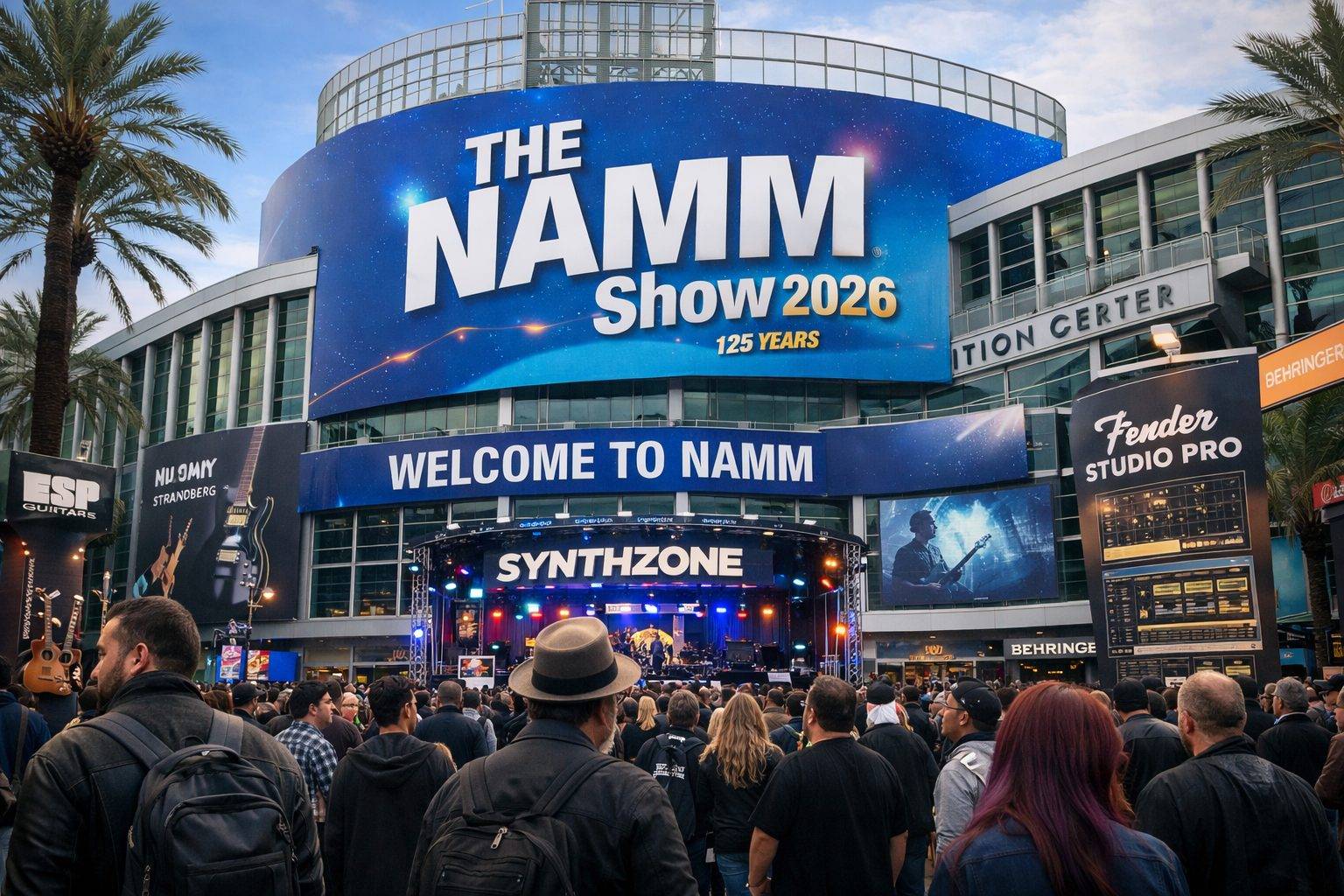
The first major music industry gathering of the year returned with full force from January 20 to 24, 2026, at the Anaheim Convention Center in California. Celebrating its 125th anniversary, The NAMM Show once again brought together thousands of musicians, makers, educators, creators, and industry leaders. Over five days it showcased groundbreaking gear, immersive education, inspiring performances, and a palpable sense of where the music community is headed.
Signature & Spotlight Instruments
ESP Guitars debuted an exciting new lineup of Signature Series guitars, with eight models blending classic craftsmanship with modern touches. A cultural twist came from Epiphone's new signature SG with visual and musical nods to Malian artist Fatoumata Diawara. For players seeking something different, Strandberg's Chameleon MIDI guitar, developed with Jamstik, brought ergonomic playability together with advanced MIDI control.
Hybrid and Nylon Options
Abasi's Córdoba Stage 7 blended nylon-string warmth with multiscale design and electric playability. Guitarist Tim Henson's latest Ibanez nylon-electric models - the TOD100N and TOD100FMN - offered premium tones and improved electronics. Ed Sheeran's PRS SE “Cosmic Splash” baritone added star power, limited to just 1,000 pieces and supporting music education initiatives.
Beyond Guitars: The Broader Music-Tech Landscape
Behringer's JN-80 brought a modernized take on the classic Juno sound with expanded polyphony and MIDI features. The ASM Leviasynth stood out as a flagship polysynth with extensive sound-shaping capabilities. Fender's Studio Pro DAW reimagined music production workflows with AI-assisted tools, and companies like Synido showcased a new generation of wireless gear - their Live Dock A30 wireless mixing and recording system embodying a shift toward mobile, intuitive creation environments.
Top 10 NAMM 2026 Gear Picks (TIGA Curated)
A glimpse into the future. Ergonomic design meets deep MIDI control, opening doors for composers, producers, and experimental players.
A powerful cultural statement. This guitar blends classic SG DNA with African artistic identity and modern tone sensibilities.
Nylon strings reimagined. Built for electric players who want classical warmth without traditional limitations.
Precision, aesthetics, and versatility. A nylon-electric hybrid designed for technically demanding modern players.
Limited, expressive, and purpose-driven. A baritone with unique visual flair supporting music education initiatives.
Craftsmanship meets individuality. ESP’s new signature models show that artist-driven design is still thriving.
A guitarist-first production environment. Simplifies recording, tone shaping, and workflow for creators at every level.
A modern nod to vintage sound. Classic Juno-inspired tones with updated MIDI and performance features.
Expressive and powerful. Designed for sound designers and performers who want deep control and rich sonic palettes.
Cut the cables. A flexible wireless setup ideal for live performers, home studios, and content creators.
Guitarist Reactions from the NAMM 2026 Floor
“NAMM 2026 feels less about excess and more about intention. Builders are finally listening to how musicians actually play today.”
“The line between guitar, controller, and studio tool is officially gone. MIDI guitars and hybrid instruments were everywhere.”
“Loved seeing cultural identity reflected in instruments this year. Guitars aren’t just products, they’re stories.”
“Wireless rigs are no longer a luxury. They’re becoming the standard for live and mobile musicians.”
For Indian guitarists, this matters deeply. We are part of a global musical ecosystem, even when our journeys begin in bedrooms, classrooms, churches, studios, or small local stages. The true value of NAMM lies beyond innovation - it lies in recognition that music is shaped by culture, emotion, and lived experience.
NAMM is not only about what is new. It is about what endures. The NAMM Show 2026 reaffirmed why it remains a cornerstone of the music world: it honored history while pushing forward with tools, ideas, and instruments that shape how we make sound.
Universal Audio Anti 1992
The '90s high-gain legend, reimagined on your pedalboard
View Full Profile →
If you've ever chased the raw, scooped crunch of a classic 120-watt high-gain amp but wondered how to capture that essence without hauling a monstrous stack, Universal Audio's Anti 1992 might be the answer - and then some. This pedal doesn't just emulate a legendary high-gain head; it distills its spirit into a road-ready stompbox that works on stage, in the studio, or straight into a recording rig.
The heart of the pedal is its amp emulation engine, modelled from iconic ’90s tone monsters. Whether you're chasing tight, scooped rhythm tones reminiscent of Scandinavian death metal or thick, saturated crunches rooted in American thrash, Anti delivers tones with character and clarity. Built-in overdrive, a noise gate, and multiple cab simulations give players options well beyond a single “amp in a box.”
Features That Matter
Cab and Mic Modelling: Six classic mic/speaker pairings provide a palette of textures, from British 4×12 stacks to oversized American cabs, without external impulse responses.
App Control: The UAFX mobile app unlocks presets designed by professional artists and gives access to deeper parameters.
Built-In Noise Gate: Keeps high-gain tones tight and focused, reducing unwanted hiss or feedback when pushed hard.
Tone Test
Clean (rolled-back gain, volume pushed): Chords retain clarity, with a subtle thickness that feels more like a pushed preamp than a sterile clean channel - best suited for players who want body, not glass.
Drive (mid-gain rhythm crunch): Tight, controlled, and articulate. Power chords sound focused without collapsing into fizz - perfect for classic hard rock and modern alternative.
Lead (high-gain, saturation engaged): Sustain comes easily, harmonics leap out, and fast runs remain intelligible even under heavy saturation.
Drawbacks & Considerations
Some deeper tone shaping lives in the UAFX app, which can interrupt the flow for hardware-only editors. A 9V DC power supply (400 mA+) is sold separately, and onboard preset access is limited compared to full multi-preset pedals.
Verdict
The Universal Audio Anti 1992 isn't simply a pedal that tries to capture a classic amp - it's a finely crafted emulation engine with enough power, tone shaping tools, and personality to stand on its own. For players chasing iconic high-gain tones without compromise, it's a must-try piece of gear.
The Symphony Within
How playing the guitar reshapes the human brain
For centuries, the guitar has been a symbol of creativity, expression, and cultural connection. But beneath the calloused fingers and memorized chord progressions lies a silent, profound transformation: the rewiring of the human brain. Modern neuroscience reveals that guitarists aren't just making music - they are engaging in a complex neurological workout that sculpts their brains in unique and measurable ways.
The “Guitarist’s Brain Scan”
One of the most compelling pieces of evidence comes from a landmark study at the Max Planck Institute for Human Development in Berlin, which used fMRI to scan the brains of guitarists while they played duets. The brains of the two musicians, even when playing different parts, showed remarkable synchronization - not just in the auditory and motor cortices, but in deeper, socially-associated regions like the prefrontal cortex. This “inter-brain network” suggests that making music together creates a unified neural architecture, enabling the seamless, non-verbal communication essential for ensemble performance.
A Masterclass in Neuroplasticity
Bimanual Coordination: Unlike the piano, the guitar requires each hand to perform entirely different, non-symmetrical tasks - the fretting hand shapes chords and melodies, while the picking hand controls rhythm. This forces the brain's two hemispheres to communicate with exceptional speed across the corpus callosum.
Auditory-Visual-Motor Integration: A guitarist reads notation (visual), translates it into finger placements (motor), and instantly adjusts based on the sound they hear (auditory) - activating a vast network simultaneously.
Motor Cortex & Cerebellum Expansion: Skilled guitarists show enlarged and more active areas in the motor cortex corresponding to the hands and fingers, with the cerebellum acting as the body's internal metronome.
The Emotional and Cognitive Perks
Supercharged Auditory Processing: Guitarists develop exceptional pitch, timbre, and tone discrimination.
Enhanced Memory and Executive Function: Memorizing song structures and solos is constant exercise for the hippocampus and prefrontal cortex, linked to improved working memory and planning.
Stress Reduction: Playing guitar in a flow state lowers cortisol and increases dopamine and endorphin release, with the rhythmic, repetitive nature of practice having a meditative, anxiety-reducing effect.
These changes are most pronounced in individuals who practice consistently over long periods. A beginner practicing simple chords will experience rapid initial changes, while a virtuoso who has practiced for thousands of hours exhibits a highly specialized, efficient neural network dedicated to guitar playing.
The guitarist's brain is a testament to human adaptability and the profound interplay between art and science - a dynamic, evolving system that physically reshapes itself to master the six strings. So the next time you hear a guitarist play, remember: you're not just listening to music; you're witnessing the sound of a magnificent brain at work.